Discover Marbella Old Town with a fourth-generation local guide: Moorish walls, atmospheric squares, hidden chapels and stories behind the streets.
Most people know Marbella for its beaches, glamorous hotels and Puerto Banús. Yet a few minutes from the Mediterranean is a very different town: whitewashed lanes, small chapels, medieval walls and lively squares. I’m Javier González, a licensed local guide and founder of Tour Marbella Experiences. My family has lived in this area for four generations, and my connection with Marbella has a very particular story.
After my grandmother died, I found an old identity document in her bedside table. It belonged to her father, my great-grandfather. He had been born in Marbella on 28 September 1885, and his occupation was recorded simply as “agricultural”. That little document brought an older Marbella into focus for me: a town of agriculture, fishing, and at various times industry, long before its reputation for luxury. I often think of it when I walk through these streets with visitors.
From Alameda Park to the Mediterranean
Our visit to Marbella usually begins at Alameda Park. Its trees and colourful ceramic benches give us a cool, relaxed meeting place before setting off. From here we follow Avenida del Mar towards the sea, passing a collection of bronze sculptures based on designs by Salvador Dalí. They make a surprising introduction to a town that many people associate only with beaches.
At the promenade, the Mediterranean spreads out in front of us, while the mountains stand behind Marbella. This setting helps explain why visitors have long been drawn here. In the 1940s Ricardo Soriano promoted the area’s appeal; Alfonso de Hohenlohe later helped transform its profile with the Marbella Club, opened in 1954, and Puerto Banús followed in 1970. The meeting of local traditions with international glamour changed Marbella forever—but that’s another story, and one worth telling in its own right.
Narrow streets and the town’s Islamic past
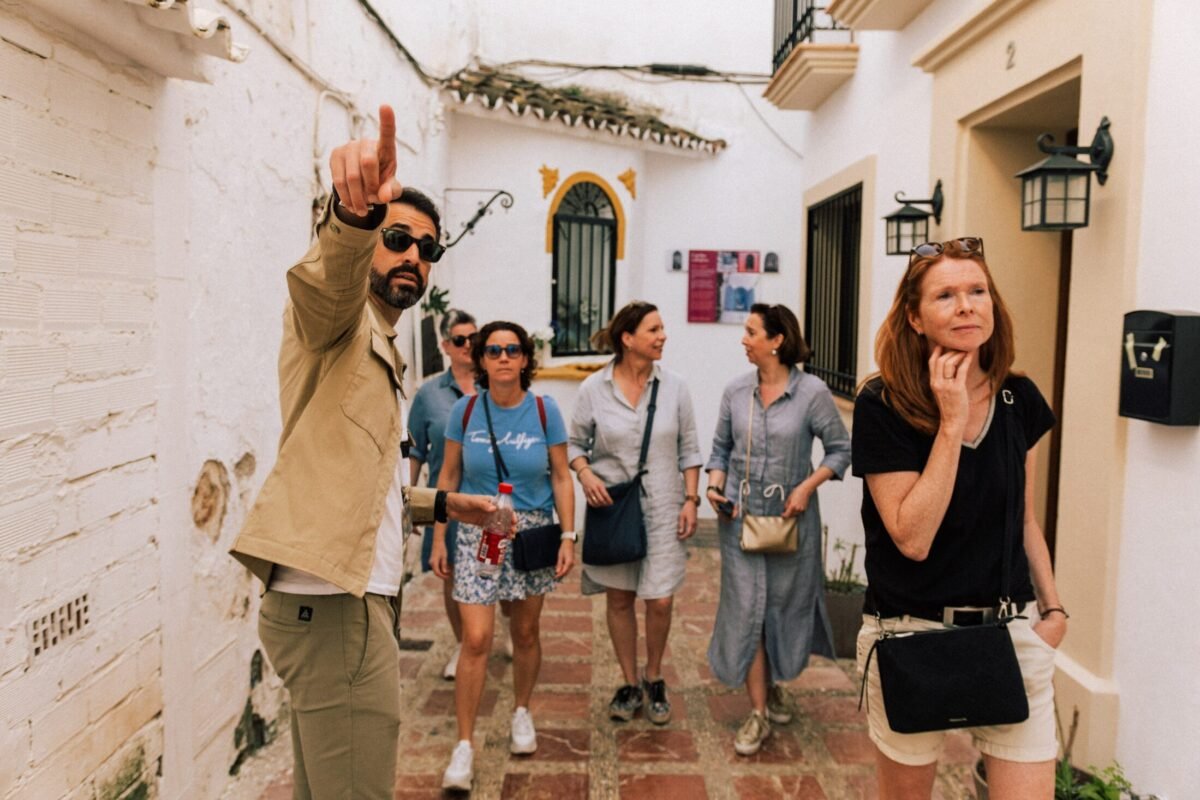
We turn back inland, where the spacious seafront gives way to a network of narrow, winding streets. Marbella was a fortified town during the Islamic period, and parts of the old street pattern still suggest the medieval settlement. Close-set buildings and narrow passages create welcome shade in hot weather, although the layout also reflects many centuries of urban change. I enjoy watching visitors notice how abruptly the atmosphere changes as we enter the historic centre.
San Juan de Dios: a chapel easily missed
The Chapel of San Juan de Dios is a reminder that a place does not need to be monumental to be historically important. Associated with a sixteenth-century hospital complex, it belongs to the Marbella that developed after the Christian conquest. Visitors exploring without context can easily pass its doorway. On a guided walk, small buildings like this open up stories about care, faith and ordinary life that are often absent from postcard images.
Plaza Altamirano and its quiet atmosphere
Plaza Altamirano is one of my favourite places to stop. It offers an intimate, lived-in atmosphere within the old town, with historic façades and a pleasing sense of scale. I prefer to let people look around rather than rush them towards the next landmark. In a destination so often described through luxury, squares like this reveal how much pleasure there is in everyday details: a doorway, a balcony, a conversation or a peaceful moment.
Hospital Bazán: from charity to contemporary art
A little farther on, the former Hospital Bazán tells another story of change. Founded in the late sixteenth century, it now houses the Museo del Grabado Español Contemporáneo, dedicated to Spanish graphic art. Its collections include works by major figures such as Picasso and Dalí, although particular pieces on display may vary. I love the contrast between the building’s original purpose and its cultural role today: Marbella’s artistic heritage exists well beyond the seafront.
The Alcazaba and Marbella’s medieval walls
Near the castle, or alcazaba, the story reaches further back. The fortress has origins associated with the tenth century, while the walls visible today reflect more than one medieval building phase. Some sections incorporate reused material from earlier periods. Looking at these remains, it is worth remembering that this was once a defended settlement with controlled entrances, not an open resort town. The layers of Roman, Islamic and later Christian history are visible within a remarkably small area.
The remains are not all from a single moment, and they are not one solitary surviving wall. That distinction matters: the town’s heritage is more complex, and more interesting, than a simplified story. The walls help us imagine the people who lived, traded and worked here long before the modern tourism economy.
Calle Carmen: the picture many visitors take home
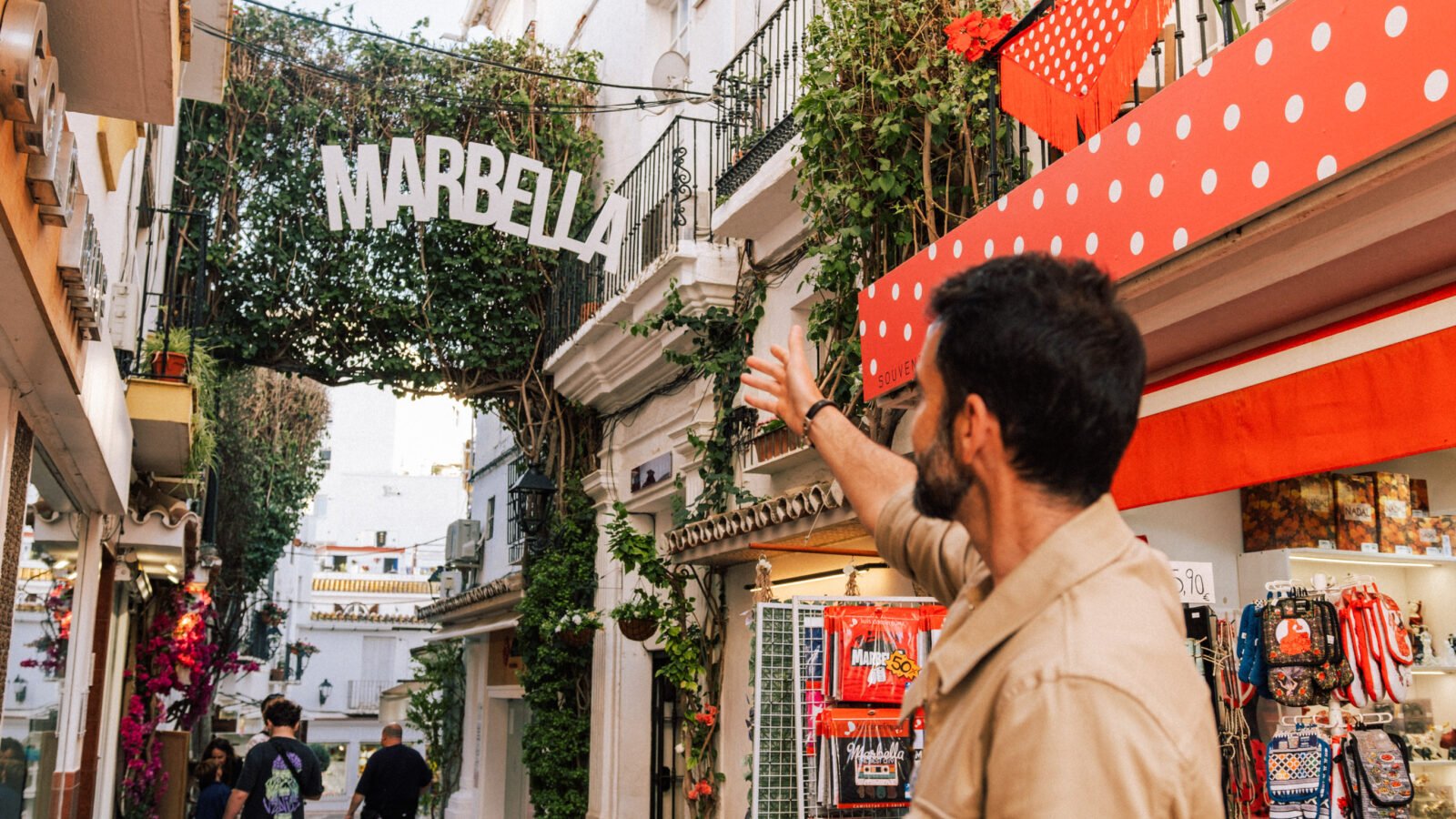
Next comes Calle Carmen, surely one of the most photographed streets in Marbella’s historic centre. White façades, flowers and the view towards the Church of the Incarnation create a quintessentially Andalusian scene. It is worth looking up as well as ahead: these streets are real places where people have lived and worked, not simply decorative backdrops. Photography is part of the fun, but I encourage visitors to take a moment to notice the street itself.
Plaza de los Naranjos: a new square for a changing town
We finish in Plaza de los Naranjos. It feels timeless, but its present form tells a story of change. After Marbella’s incorporation into the Crown of Castile in 1485, the earlier urban fabric was reorganised to create a Castilian-style main square. The civic buildings around it, including the Town Hall, gave the new space a political and administrative purpose. Public squares also served for celebrations, ceremonies and spectacles. Bullfighting, long before purpose-built arenas became widespread, was among the activities staged in Spanish town squares; local photographs also preserve later bullfighting scenes in Plaza de los Naranjos.
Even the trees have a history. The orange trees that now define the square were planted in 1941, after earlier changes to its landscaping. I like telling guests this because it makes us reconsider what “traditional” means. The square is both a historical place and a living public space, where residents and visitors continue to meet, eat and talk.
A few practical tips for visiting Marbella Old Town
Allow around two hours for a comfortable walk, or more if you plan to visit the museum, stop for a meal or browse shops. Mornings are often best during hot months; evenings bring a different atmosphere. The historic centre is best explored on foot, but expect traditional paving and some uneven surfaces. You can certainly discover it independently; its streets are beautiful in their own right.
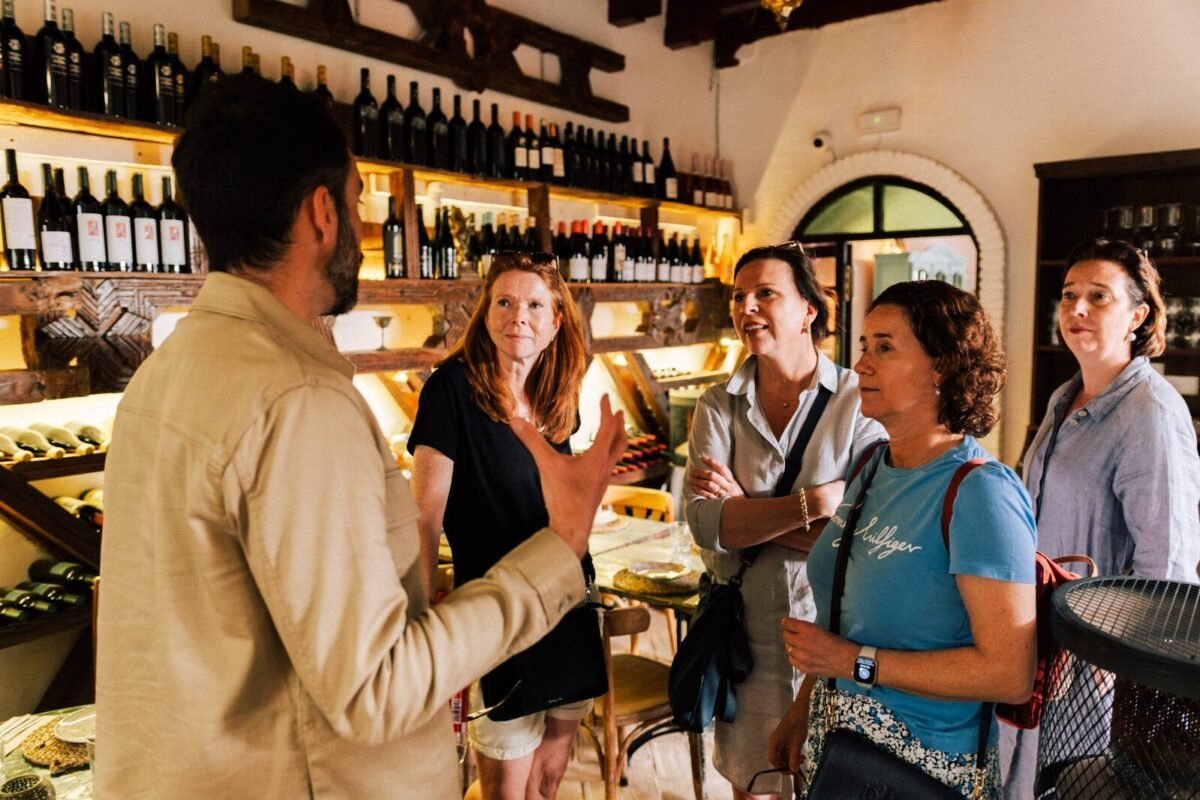
For me, though, what makes a walk memorable is the story behind the sights. A square means more when you know why it was made. A surviving wall means more when you understand who built and changed it. And the town means more when you can connect the Marbella of today with the people who lived here before us. If you would enjoy that perspective, explore our private Marbella Old Town walking tour, led by licensed local guides. Food lovers might also enjoy our private food and wine experience.
Every time I finish this walk, I think again of the identity document from my grandmother’s bedside table. My great-grandfather’s Marbella and the Marbella you see today are very different places. Yet they are part of the same story, and sharing that connection is one of the great pleasures of my work.